

Real Practitioners, Real Practice.
Every event we host is designed with intention, from the atmosphere we create to the way each session flows.
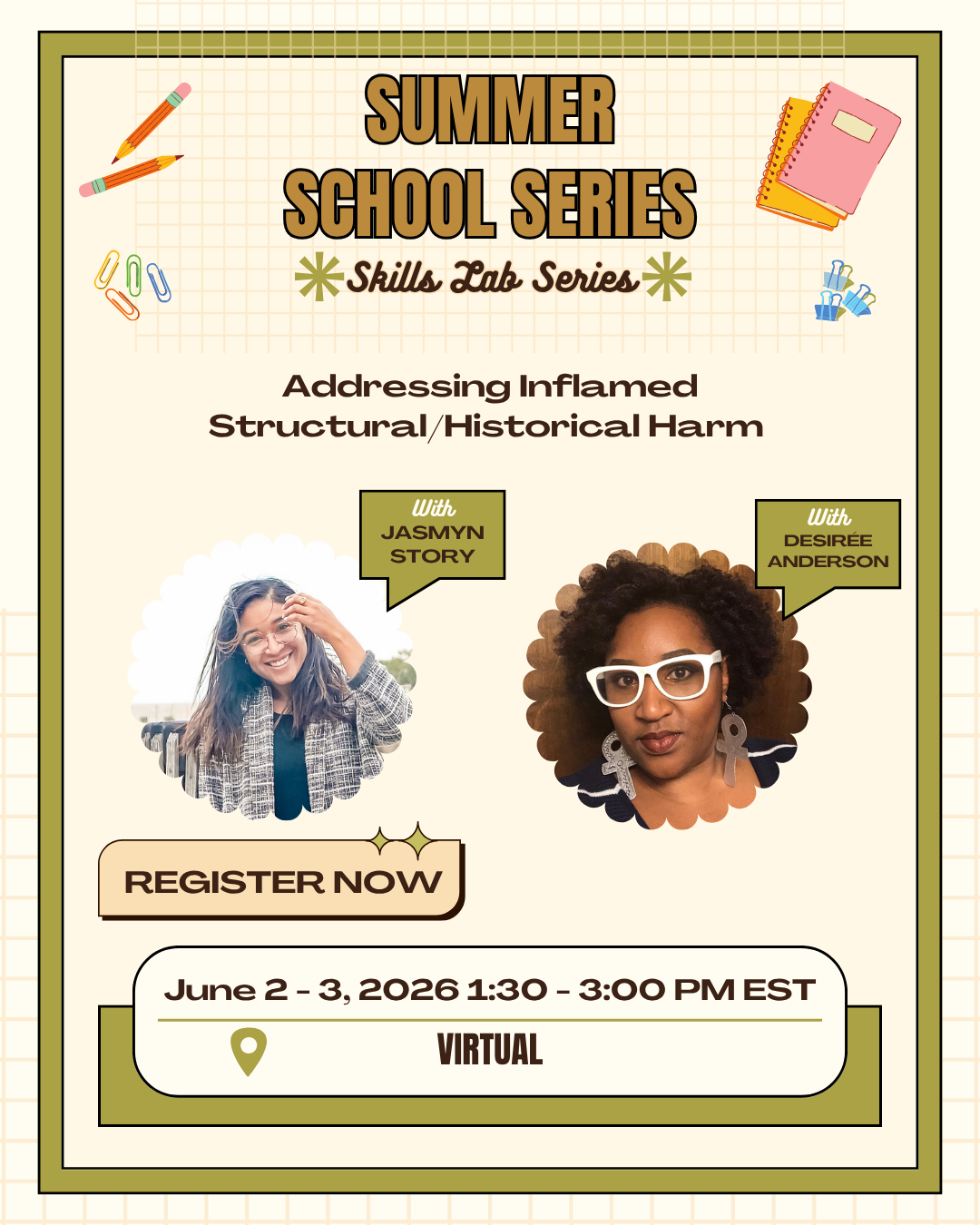
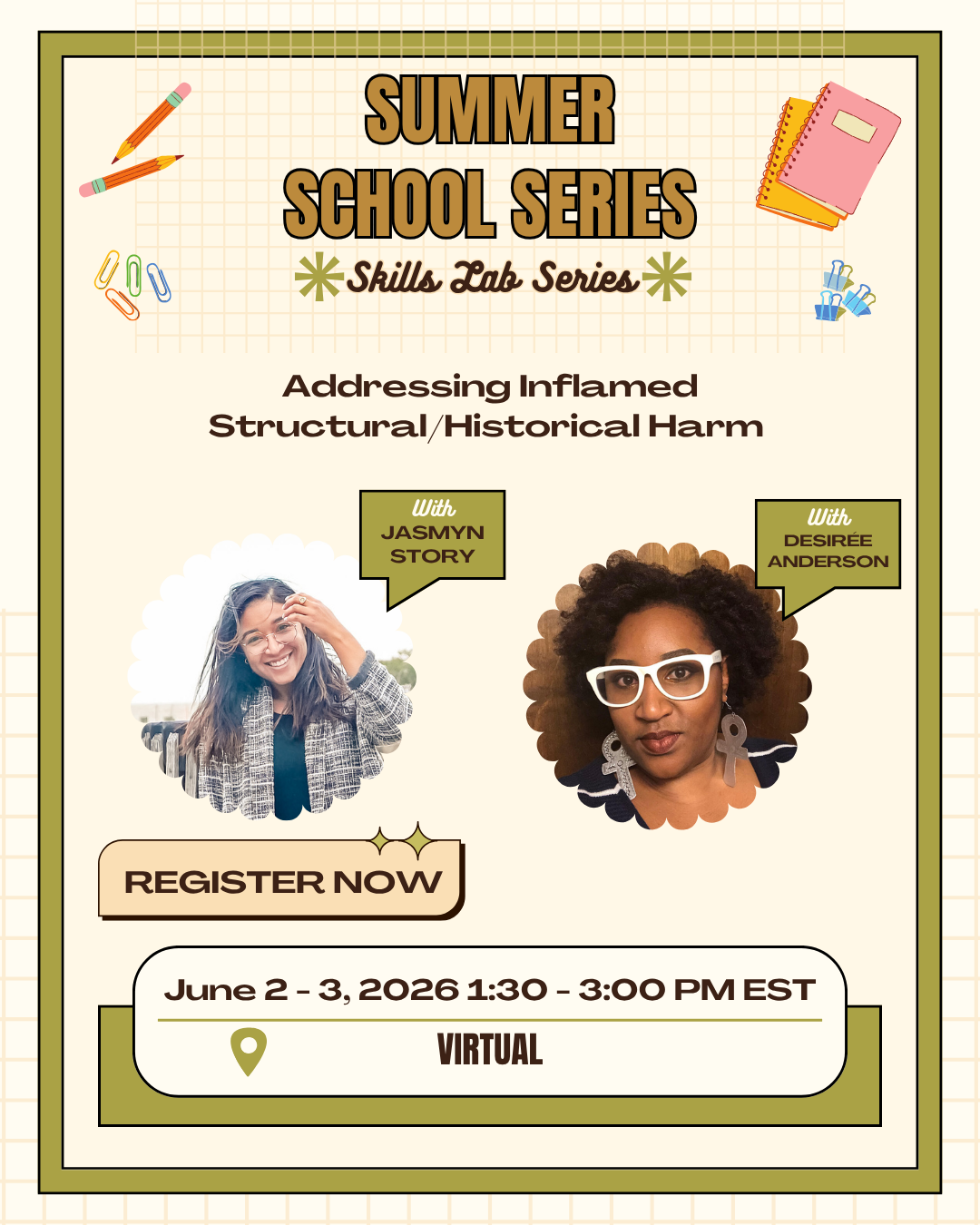
Dates: June 2 & 3, 2026 (Tuesday & Wednesday)
Time: 1:30–3:00 PM EST (each day)
Total Hours: 3
This two-part skill lab is designed for practitioners ready to deepen their capacity to respond to harm that is not only interpersonal but also rooted in structural and historical inequities. Together, we will explore how inflamed structural and historical harm shows up in real-time conflicts, and what it demands of us as facilitators. Inflamed structural and historical harm “describes a violation or incident that evokes or alludes to structural or historical violence” (Story, 2023).
Participants will engage in applied learning that moves beyond theory into practice, including:
Identifying when harm is layered within historical and systemic contexts
Navigating power, identity, and accountability within restorative processes
Practicing facilitation strategies that hold both individual and collective harm
This session is best suited for those with prior experience in restorative justice, peacemaking circles, or nonviolent communication who are looking to expand their facilitation practice with greater nuance and responsibility.
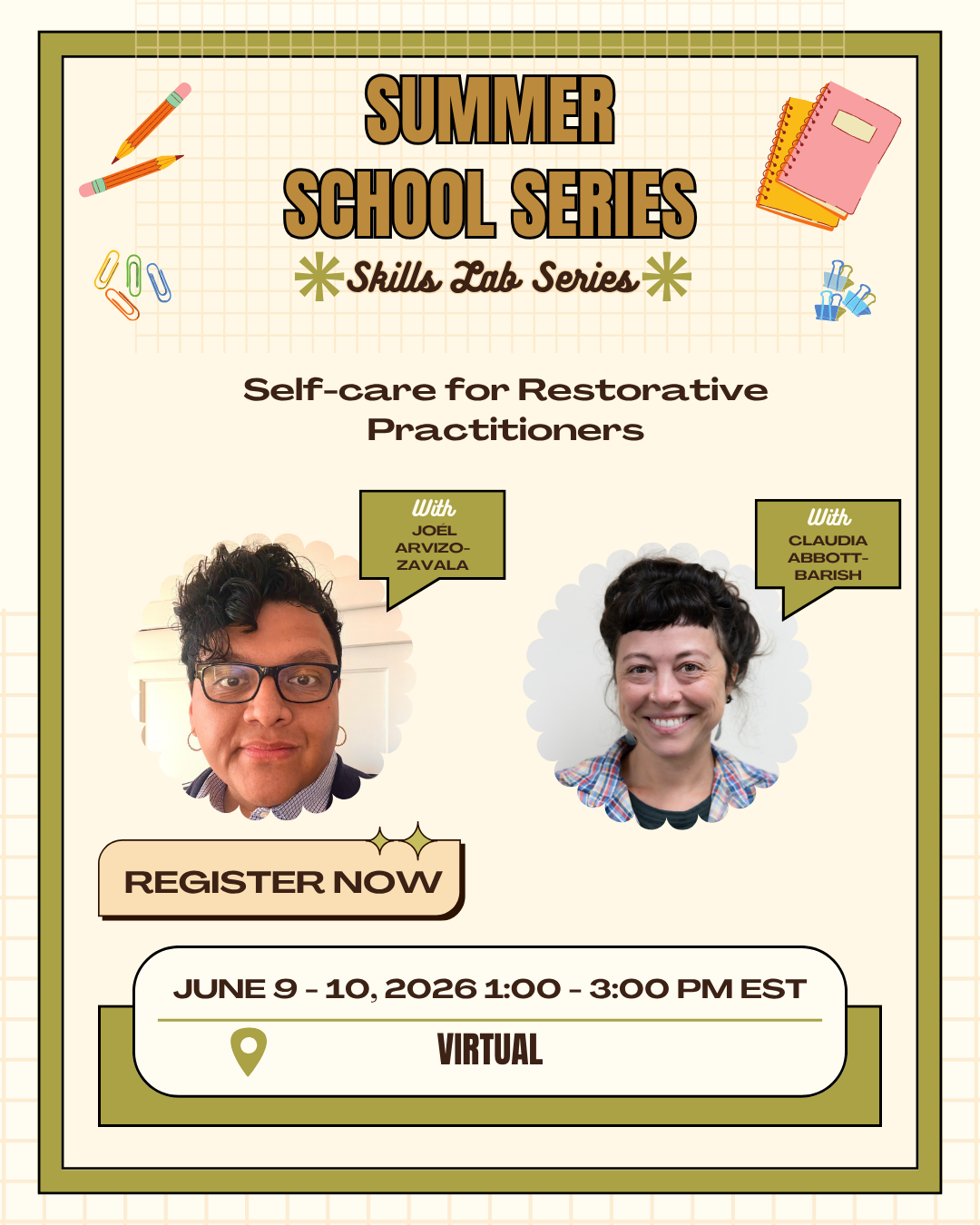
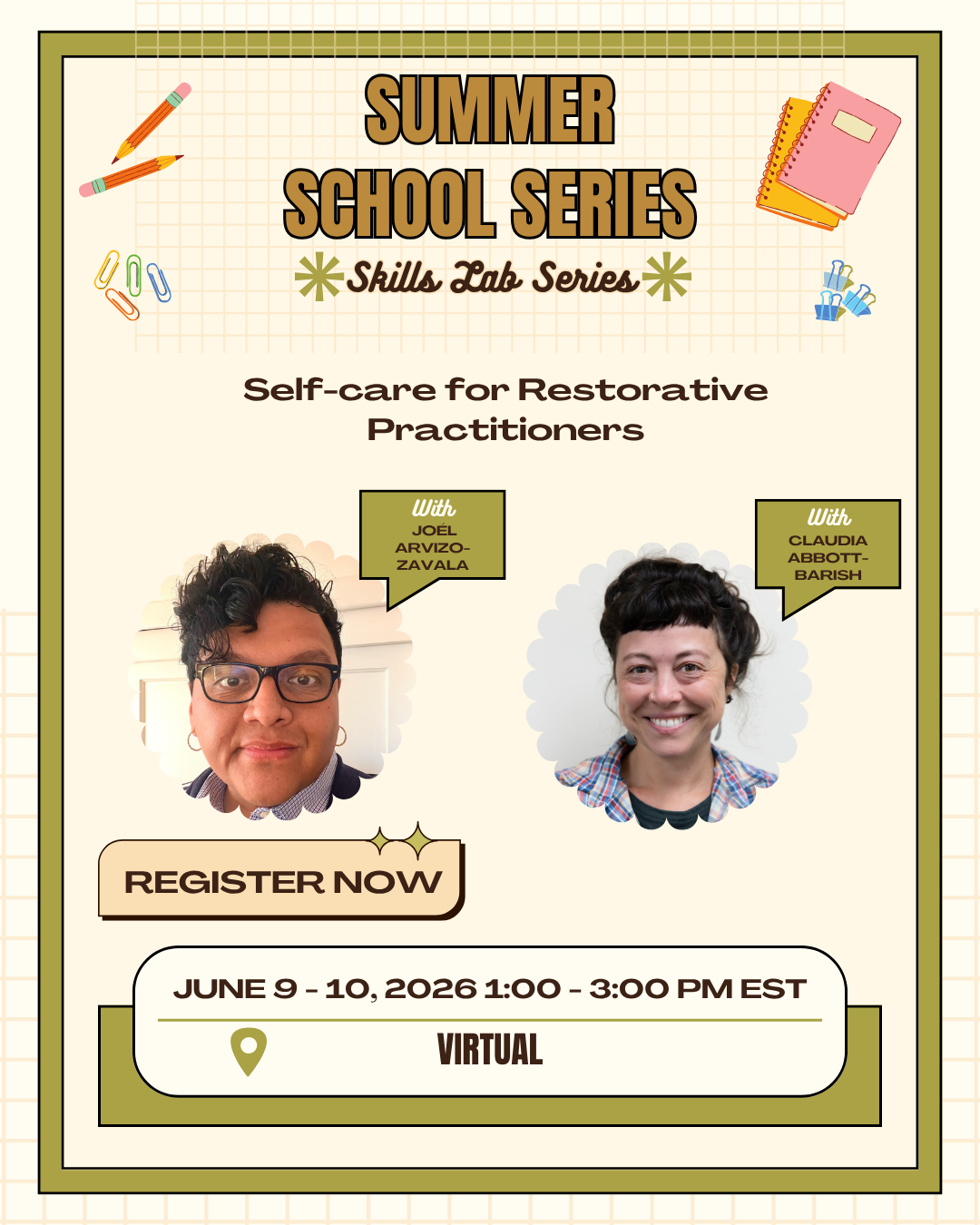
Date: June 30th & June 31st
Time: 1:00 to 3:00 PM Eastern Time (EST)
Total Hours: 4
For RJ practitioners to meaningfully engage with “self-care,” we must consider our own internalized barriers to caring for ourselves, and center our intuitive knowledge through healing-centered modalities.
This session will explore concepts of practitioner self-abandonment, as well as ways to center collective capacity assessment in practice. Together we will engage with knowledges that support psychological and emotional hygiene for empathic practitioners, as well as practices that enable us to hold space for our own vulnerable parts equal to what we offer our clients.
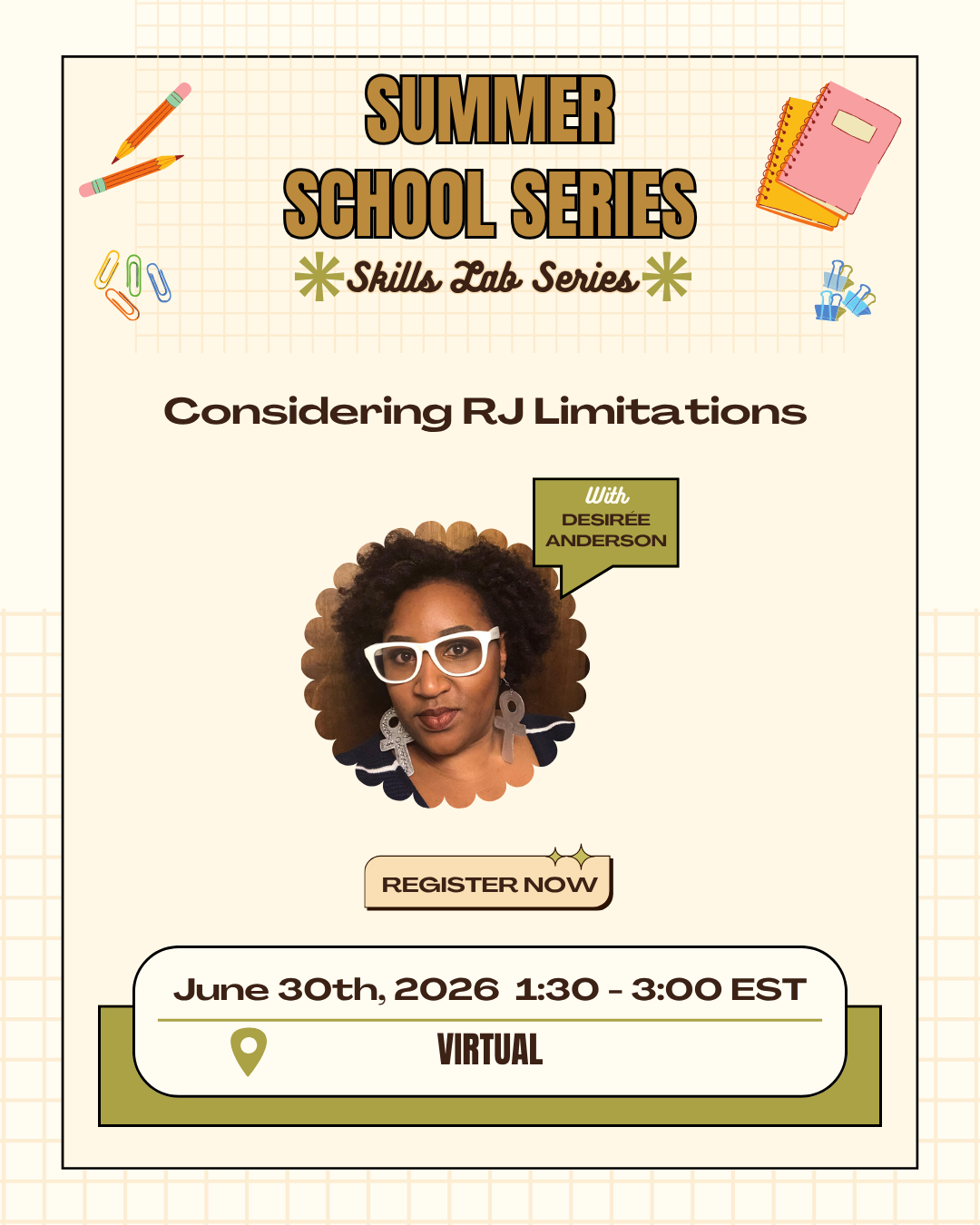
Date: June 30, 2026 (Tuesday)
Time: 1:30–3:00 PM EST
Total Hours: 1.5
Restorative justice is powerful, but it is not neutral, and it is not always the right tool.
This session invites practitioners to engage in a critical examination of restorative justice by exploring its limitations across contexts. We will engage questions that are often left unspoken: When does RJ risk reproducing harm? How do institutional pressures shape what is possible? What ethical considerations must guide our decisions to use—or not use—restorative approaches?
Together, we will explore:
Power dynamics and consent within restorative processes
Institutional constraints and co-optation of RJ
Situations where RJ may not be appropriate or sufficient
This is a reflective, discussion-based session designed for practitioners committed to using restorative justice with integrity, critical awareness, and care.

Date: July 14, 2026
Time: 1:30 - 3:00 pm EST
Total Hours: 1.5 hrs
Format: Webinar
Description: Nonviolent Communication (NVC) is a set of ideas and skills for self-connection, empathic listening, and authentic expression. It has global reach, versatile applications, and is deeply complementary with restorative justice philosophy and processes. This introductory session is for those curious about NVC, generally, and for restorative practitioners wishing to enhance their work by integrating NVC.

Still have questions? Take a look at the FAQ or reach out anytime. If you’re feeling ready, go ahead and register for a workshop.
Your Questions, Answered-
What distinguishes training with Honeycomb Justice is its grounding in lived practice, not just theory. The work is shaped by real-time experience navigating harm, accountability, and repair across diverse communities and systems, so participants engage tools that are already tested in complex, high-stakes environments.
-
You can reach us anytime via our contact page or email. We aim to respond quickly, usually within one business day.
-
Yes. Honeycomb Justice offers scholarships to increase access to training, prioritizing Indigenous, Trans, Nonbinary, and currently incarcerated community members.
Reach out if you’d like support.